AI SDR best practices: a 30-day rollout playbook
 12 minutes
 10.04.2026
AI SDR rollouts split into two camps. Some compound every month: pipeline grows, SDR headcount stays flat, and reps spend less time on manual outreach. Others stall right after the pilot, and the tool quietly gets ignored.
The difference comes down to three things: how the rollout is scoped, what gets measured in the first 30 days, and how quickly the team adjusts once real data comes in.
This guide covers what separates a rollout that scales from one that quietly dies: the building blocks an AI SDR needs, a 30-day plan to deploy one, the KPIs worth tracking, and the failure modes to plan around.
For the underlying definition, start with what an AI SDR actually is. This guide assumes that part is settled and focuses on getting live traffic through one.
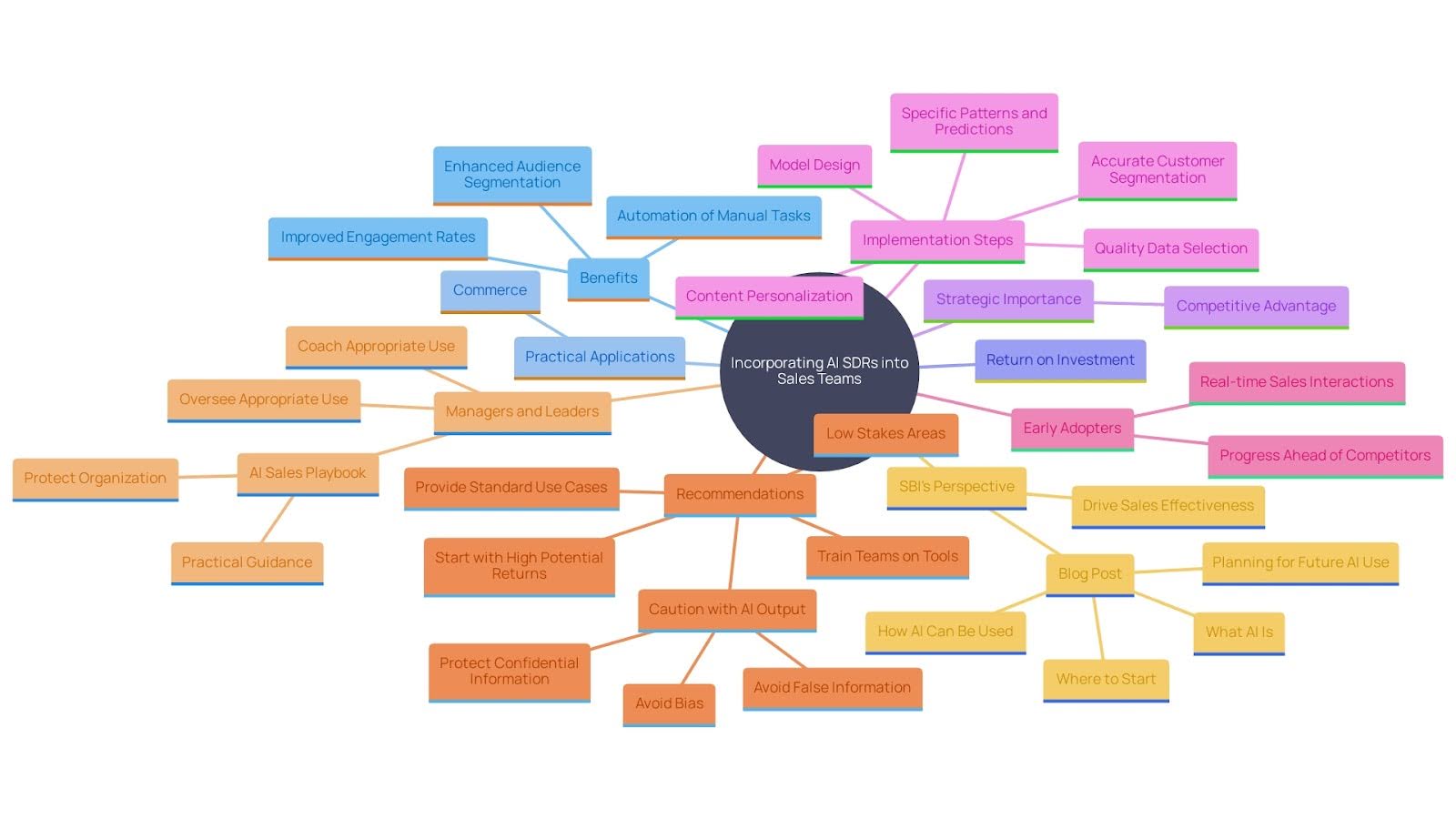
Why most AI SDR rollouts stall before they scale
Most AI SDR rollouts stall because the pilot never had a defined exit condition. Teams launch a proof of concept, get a handful of good conversations, and treat that as success without measuring against a baseline. Without a KPI-linked review in the first 30 days, a pilot quietly turns into a permanent pilot.
A pilot usually launches with energy: a rep champions it, the first few conversations look promising, and everyone agrees to check back in a month. The problem shows up at that check-in. Without a baseline recorded before launch, there is nothing concrete to compare against, so the conversation becomes anecdote versus anecdote.
Most sales orgs are past the adoption question already. The open question now is execution quality.
Sales teams already trust the category in results, too. 83% of sales teams using AI saw revenue growth this year, versus 66% of teams without it, according to Salesforce’s 2024 State of Sales Report. Adoption stopped being the differentiator once most competitors turned some form of AI on. What separates the winning teams is a rollout with a scope, a timeline, and an owner past week one.
A simple rollout plan can still work well. It just needs to survive contact with a real sales team: quota pressure, a CRM that’s already messy, and reps who weren’t part of the buying decision.
A few signals predict whether a team is ready to run that plan well. A named executive sponsor who reviews the pilot personally, not just a Slack channel, is one. A CRM that’s already reasonably clean is another, since an AI SDR trained on messy data inherits the mess. The third is a sales team that’s been told why the pilot exists, rather than discovering the tool through a new lead showing up unannounced.
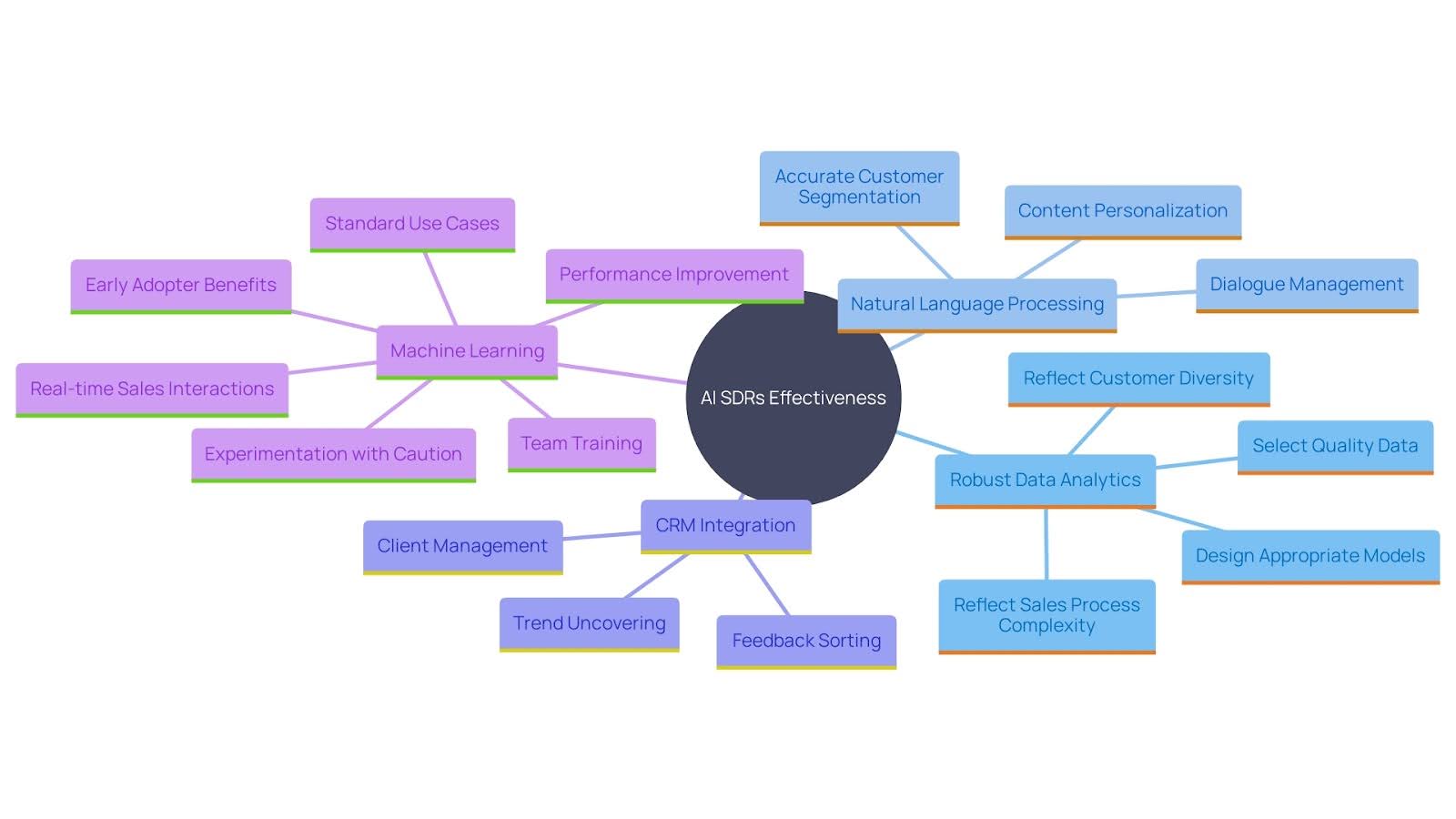
The building blocks of an AI SDR that actually works
An AI SDR that performs has four working parts: a data layer that scores and prioritizes leads, a conversational layer that holds a natural exchange across channels, a CRM sync that keeps reps and the agent looking at the same record, and a feedback loop that improves targeting as more conversations complete. Missing any one of the four caps how far the rollout can scale.
The data layer decides which leads get attention first. It pulls firmographic and behavioral signals, whichever the team already tracks, and ranks accounts so reps and the agent both work the same priority list. Dashly’s AI SDR agent guide covers how this scoring layer is typically configured during setup.
The conversational layer is what a prospect actually experiences: replies across email, chat, and messaging apps that read like a person wrote them, rather than a script triggered by a keyword. This is the layer most vendor demos handle well and most teams under-test, since a scripted demo conversation and a real one with a distracted prospect on a Friday afternoon test very different things.
CRM sync keeps the handoff clean. When the agent and the sales rep read from the same lead record in real time, prioritization stays consistent and nothing gets logged twice. Broken sync is one of the most common reasons reps stop trusting an AI SDR mid-rollout: the agent books a meeting the rep never sees, or logs an update that contradicts what’s already in the CRM.
The feedback loop closes the system. Every completed conversation, whether it converts or not, becomes a signal the model uses to refine targeting and messaging for the next batch of leads.
An AI SDR best practice is the discipline of shipping a rollout with a defined 30-day scope, a KPI baseline measured before launch, and a named owner who reviews results weekly. The specific playbook matters less than having all three in place.
Get a rollout audit to see which of these four layers your current setup is missing.
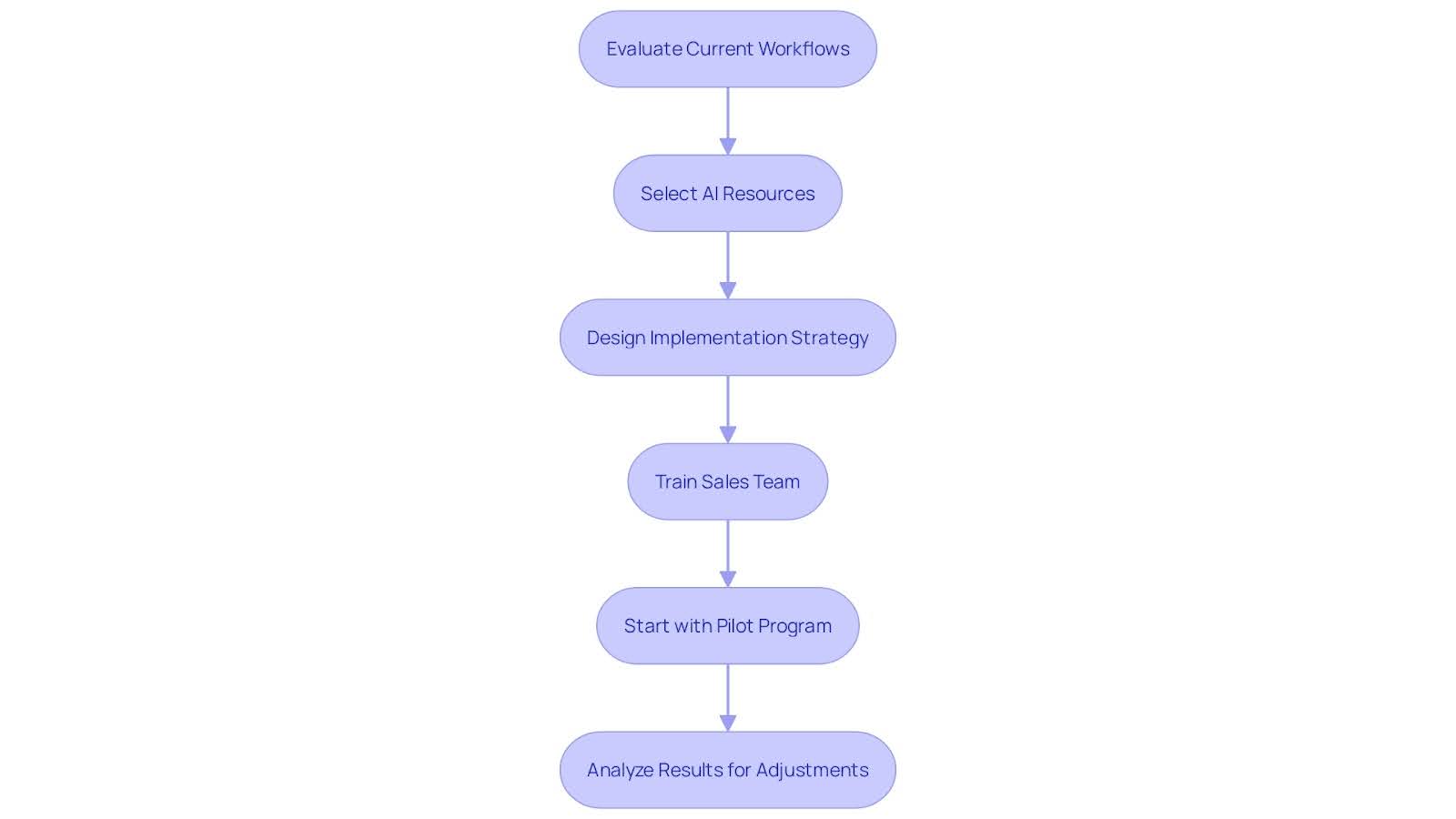
A 30-day rollout plan for AI SDR implementation
A 30-day AI SDR rollout plan has four stages: scope and baseline in week one, configure and connect the tool in week two, run a live pilot on a limited lead segment in week three, and review results against the baseline before deciding to scale in week four. Compressing these stages is the most common cause of a rollout that never gets a fair test.
- Week 1: scope and baseline. Pick one lead segment, such as one region, one lead source, or one ICP tier, agree on 2-3 KPIs to track, and record the current baseline for each before touching the tool. Without a pre-rollout baseline, week four’s results have nothing to compare against.
- Week 2: configure and connect. Connect the AI SDR to the CRM and the channels the segment actually uses, whether that’s email, chat, or WhatsApp. Write the qualification criteria together with sales, not only marketing, and set escalation rules for when the agent should hand off to a human.
- Week 3: run the pilot. Let the agent work the chosen segment live, with a named owner checking transcripts daily for the first few days and weekly after that. Fix messaging and escalation rules as issues surface, and hold off on expanding scope until the review.
- Week 4: review and decide. Compare results against the week-one baseline on the agreed KPIs, not on anecdote. Decide to scale, adjust, or kill the pilot, and document the reasoning either way, so the next rollout doesn’t repeat the same blind spots.
Map this to your funnel before locking the week-one scope, so the KPIs match how your team actually sells.
Dashly’s own onboarding follows a version of this structure, scoping every rollout to one funnel before expanding. Three of those rollouts, at a MarTech platform, a social-ads platform, and a communications API company, are broken down with real numbers further down this guide.
KPIs to track during and after rollout
The KPIs worth tracking during an AI SDR rollout are lead-to-meeting rate, response time, meeting show-up rate, and cost per booked meeting. Track all four from week one, not just the ones that look good by week four. A rollout that only reports its best metric is usually hiding a weak one.
Lead-to-meeting rate is the core efficiency number: how many leads in the pilot segment turn into a booked meeting. Compare it against the pre-rollout baseline from week one, not against a vendor’s marketing benchmark. Funnel shape varies too much between companies for an outside number to mean much.
Response time is where AI SDRs earn their keep fastest. A lead that waits an hour for a reply is already cooling off. An agent that replies within a minute, on whichever channel the lead used, keeps the conversation where intent was highest.
Meeting show-up rate catches a problem lead-to-meeting rate hides: plenty of booked meetings quietly never happen. Cost per booked meeting ties the pilot back to a number finance already tracks, and it’s the one metric worth reporting up before asking for budget to scale.
A weekly reporting cadence keeps these four numbers honest. The pilot owner from week three pulls all four into one view, compares them against the week-one baseline, and flags anything moving the wrong direction before the week-four review. Waiting until week four to look at the data for the first time defeats the point of tracking it weekly.
See these KPIs in your data before committing to a full-scale rollout.
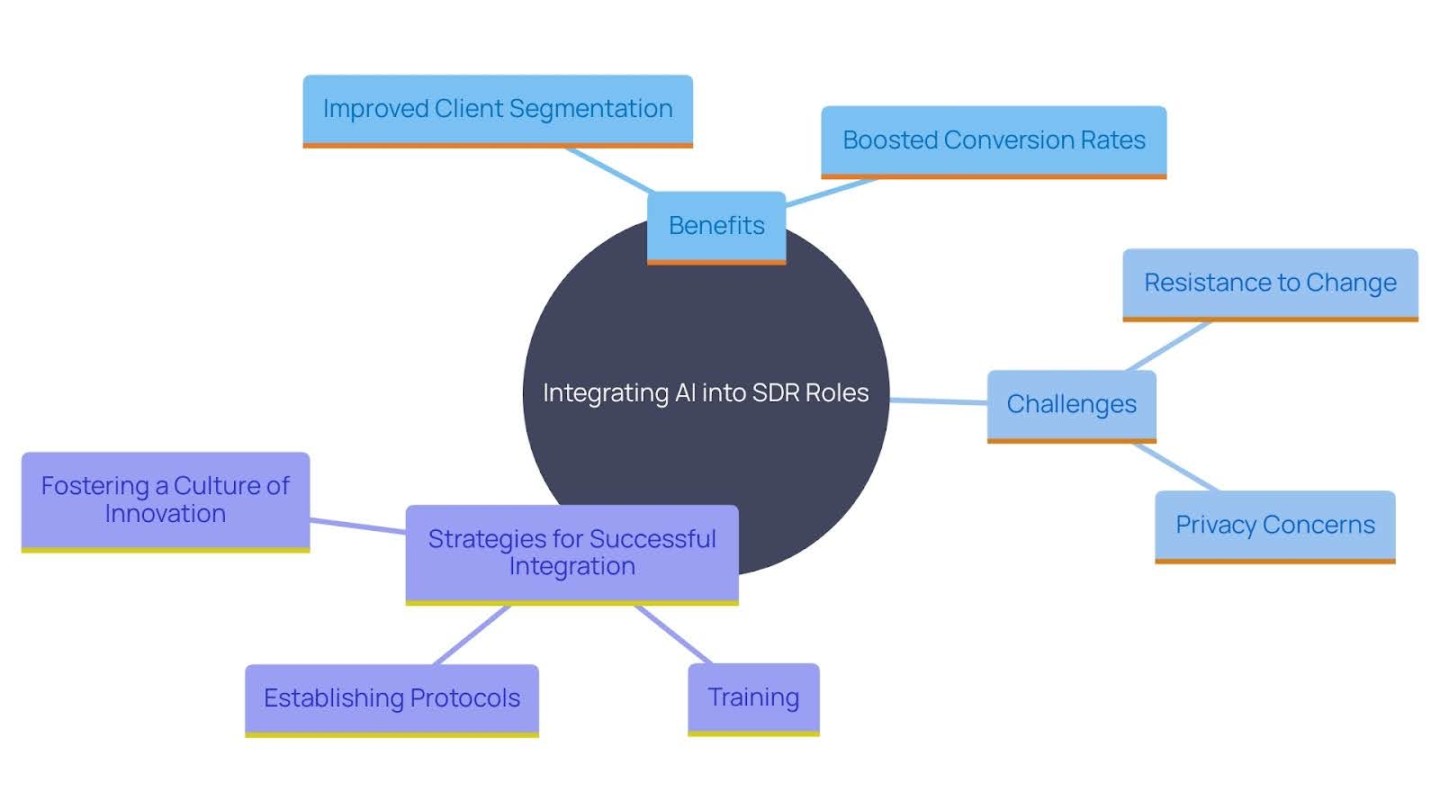
Common failure modes and how to avoid them
AI SDR rollouts most often fail for three reasons: no clear owner after the pilot ends, escalation rules that never got written down, and a team that expected full automation on day one instead of a 30-day ramp. Gartner found 30% of generative AI projects get abandoned after proof of concept, and AI SDR pilots follow the same pattern when nobody owns the metrics past week one, according to Gartner’s 2024 research.
The most common failure mode is organizational rather than technical. A pilot gets sponsored, runs for a few weeks, and then the sponsor moves to the next priority. Nobody schedules the week-four review, so the pilot keeps running quietly in the background until someone asks why it’s still not live company-wide.
Dashly’s own team hit a version of this early on. The full account of that rollout is worth reading before starting a pilot, since most of the mistakes were process gaps rather than a limitation of the technology.
Data privacy needs a real answer during rollout planning. Every AI SDR touches lead data across channels, so review data handling before launch, not after a prospect asks where their information went. Human oversight on escalations, especially anything the agent is unsure how to answer, keeps a wrong answer from reaching a real prospect.
Proof: what AI SDR best practices look like in production
Three Dashly’s AI SDR rollouts show what following these best practices produces in production: a MarTech platform reached 568% ROMI on a new demo funnel, a social-ads platform saw a 536% increase in booked meetings, and a communications API company cut SDR process costs by 60%. All three started with the same scoped, measured rollout described above.
InfluADS, a MarTech platform for influencer marketing, scoped its pilot to a single demo funnel and measured against a clear baseline: sign-ups that never converted to a meeting. The result was 568% ROMI, meaning every dollar spent on Dashly returned $5.68, with 70% of marketing-qualified leads now booking meetings without a manager involved.
The mechanism behind that number was tier-based routing: a qualification quiz sorted leads into tiers, so only the highest-intent tier needed a manager’s time while the rest moved through automatically.
Advertising Socials ran a three-month rollout with targets agreed before launch, the same discipline the 30-day plan above compresses into four weeks. Booked meetings rose 536%, without adding a single sales hire.
That pattern, structured qualification before human involvement, repeats in the next rollout too, just applied to a cost problem instead of a growth problem.
VoiceFirst, a cloud communications platform, used its rollout to cut SDR process costs by 60%, while a 90% quiz completion rate and up to 70% of leads self-scheduling meetings kept the funnel moving without extra headcount.
None of these three companies got these results from the AI SDR platform alone. Each ran a scoped pilot, tracked KPIs against a baseline, and reviewed results before deciding to scale, the same sequence in the 30-day plan above.
Conclusion
AI SDR best practices come down to rollout discipline: scope one segment, set a baseline, run a genuine 30-day pilot, and review the KPIs before scaling. Skip any one step, and the rollout risks becoming one more stalled pilot instead of a working part of the funnel.
Teams that get this right rarely go back to fully manual outreach. Map your 30-day rollout with KPIs and escalation rules scoped to how your team actually sells.

Related reading in the AI SDR series
- Best AI SDR tools, ranked and compared
- Best inbound AI SDR for B2B SaaS
- AI SDR vs human SDR: cost economics
- Ultimate guide to an AI sales funnel
AI SDR best practices are the principles behind a rollout: scoping, baselines, KPIs, and ownership. AI SDR implementation is the technical setup, including connecting the CRM, configuring channels, and writing qualification rules. A rollout needs both to work.
A focused pilot on one lead segment takes about 30 days: a week to scope and baseline, a week to configure, a week to run the pilot live, and a week to review results before deciding to scale.
A well-run rollout keeps a human in the loop rather than removing SDRs entirely. The agent handles qualification, follow-up, and meeting booking at scale, while a person handles escalations and anything the agent is unsure how to answer.
Aim to beat the week-one baseline on lead-to-meeting rate and response time, rather than hitting an absolute number from a vendor’s marketing page. Dashly’s own rollouts show what’s achievable at full scale: a 536% increase in booked meetings and a 60% drop in SDR process costs, both after a full rollout, not a 30-day pilot.
The core discipline stays the same (scope, baseline, pilot, review), but the KPIs shift. Inbound rollouts weight response time and lead-to-meeting rate heaviest, since the lead already showed intent. Outbound rollouts weight reply rate and meeting show-up rate more heavily, since the agent is initiating contact with someone who hasn’t engaged yet.




![Create a student journey mapping for online school [4 map templates]](https://www.dashly.io/blog/wp-content/uploads/2023/04/image-3-720x317.jpg)