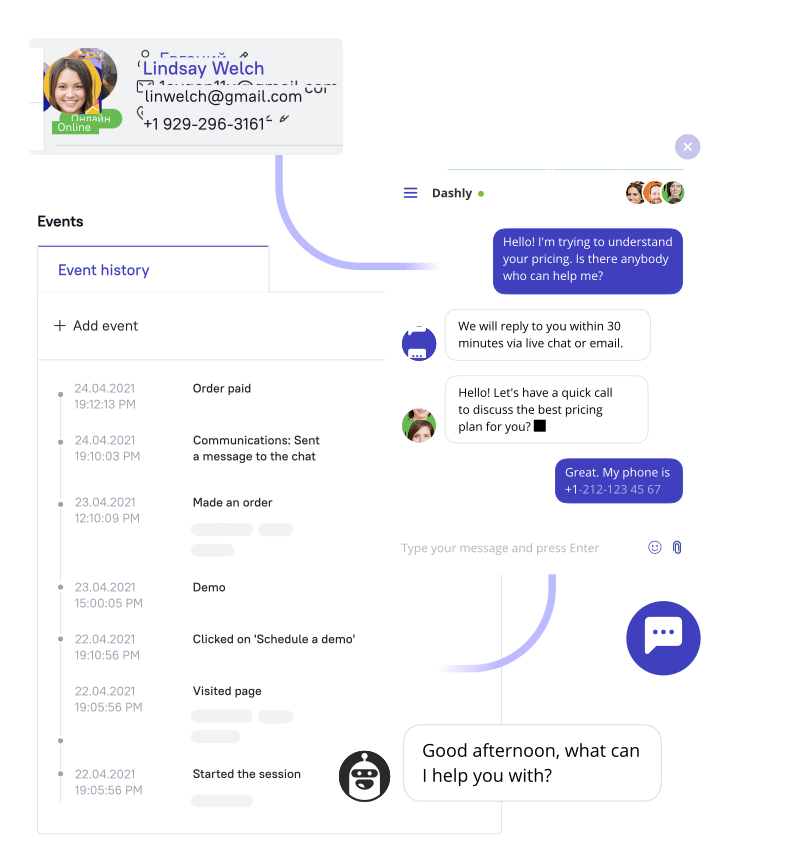
Visitor lands on /pricing/ and stays for 5 seconds
Catch active price comparison and offer a manager call
Dashly identifies anonymous website visitors and turns them into qualified conversations with proactive chat, AI-written openers, and triggered chatbots. The engagement engine runs on the same lead profile your sales and support agents read from. 0.5 to 4 percent of traffic becomes a real conversation.
Tracking captures the visitor. Triggered chains fire at the right moment. AI writes the opener from the lead profile. The conversation hands off to the agent that closes.
Dashly's tracker logs page views, time on page, scroll depth, button clicks, form events, UTM source, and account-fit data. Every visitor, anonymous or known, gets a unified profile that grows with each session.
Build chains that wait for a condition (pricing page for 5 seconds, second visit, paid traffic source) and send a triggered chat message or a chatbot with reply buttons. Audience filters target by industry, role, account size, and history.
When visitor data is rich enough, AI writes the chat copy itself. It pulls from the lead profile (pages viewed, source, prior conversations, account fit) and composes an opener that matches the visitor's actual context.
Once the visitor replies, the conversation is routed by intent. Qualification questions go to the AI Qualifier Agent. Product or how-to questions go to the AI Support Agent. The receiving agent has full context: every message, every page, every property.
Pick an audience and see the actual chat message or chatbot that fires. Numbers are from live Dashly accounts, not estimates.
Visitor lands on /pricing/ and stays for 5 seconds
Catch active price comparison and offer a manager call
Visitor scrolls to the bottom of /pricing/ and is about to leave
Recover the exit and hand off to chat
The engagement engine doesn't run on rules in isolation. It reads from the same Lead Profile that powers the rest of Dashly: events, properties, source, history, account-fit data. The same record the AI Qualifier and Support agents use after the conversation opens.
An open conversation is not the goal. The goal is a booked meeting or a solved question. Dashly routes the visitor to the agent that fits the message they just sent.
Pricing, plans, demo requests, ICP fit. The Qualifier picks up the conversation, asks the qualification questions, identifies MQLs, and books a meeting in the same chat.
See AI Qualifier Agent How-to and product intentSetup questions, integrations, feature how-tos, troubleshooting. The Support agent answers from your knowledge base and product docs, and escalates to a human only when needed.
See AI Support AgentOut-of-the-box page views, scroll, clicks, plus custom events from your code with a few lines of JS or our SDK.
Visual builder for multi-step flows with reply buttons, branches, and answer storage as visitor properties.
AI composes the chat message from the lead profile: page context, source, history, role, account fit.
Trigger by URL, source, role, plan, country, custom property, time on page, repeat visit, and any combination.
Start the conversation in chat, email, or WhatsApp. The lead profile follows the visitor across channels.
Split traffic between message variants and see which opener drives more conversations and meetings, not just clicks.
Two-way sync with HubSpot, Pipedrive, Salesforce. Profile changes flow back, MQL flag is set automatically.
Per-trigger metrics: shown, started, finished, replied, converted to meeting. End-to-end attribution.
Anonymized results from production deployments. Each number comes from a real customer running the engagement engine for at least 3 months.
Sequential triggered chains and chatbots replaced static forms across pricing, product, and exit-intent traffic. Engagement scenarios now drive 17 to 21 percent of all qualified website leads.
Course-page chatbots ranked top-3 lead source over a 3-month window. Exit-intent variant alone added 62% of total bot-generated leads.
126 chat-sourced leads in 6 months. Four closed customers covered the annual platform cost. After-hours bot kept lead capture running 24/7.
Pricing-page proactive triggers and after-hours bots replaced multi-channel form chaos. Five chat agents now process the same volume that took the entire phone team before.
Find answers to common questions about the Dashly engagement engine, triggers, and chatbots.
Most proactive chat tools fire one opener for everyone. Dashly fires from a unified Lead Profile (events, source, role, history, account fit) and the AI writes the message itself. The same profile then powers the AI Qualifier and Support agents that pick up the conversation. It is one engine across visitor tracking, triggers, AI copy, and post-conversation routing.
No. Once a visitor replies, the conversation goes to the AI Qualifier Agent for sales-fit intent, or to the AI Support Agent for how-to intent. A human only steps in for booked meetings or escalations.
Across active Dashly accounts, 0.5 to 4 percent of traffic starts a new conversation. The number depends on traffic quality, scenario coverage, and how much profile data you feed into the openers. Pricing and product pages run higher, cold homepage traffic runs lower.
There is no hard floor. With 5,000 monthly visitors a small set of triggers already produces dozens of conversations per month. Below that, the value comes from the AI Support agent on existing customer traffic, not from cold pipeline.
Tracking respects your existing consent banner. Anonymous profiles are stored without PII. Once a visitor replies in chat or hands over an email, the profile is upgraded and tied to consent records.